What is Social Media Marketing?

You are busy capturing moments from various events as part of your company’s digital marketing strategy, and do you start hearing these?

“Hey, you were the event photographer last week, weren’t you?”

“All you do is post photos? Easy job”.

Do these sound familiar to you? Or, you, as a marketer, assume, “I have taken photos of the event; let me post them on our social media platforms. Then, that’s my  job done.”?

Let me tell you–capturing, documenting, and publishing photos or videos from one event is not social media marketing. Of course, you are allowed to have these illusions as a viewer. But if you adhere to this principle as a marketer, stop what you’re doing now! Take a deep breath and understand the purpose of social media marketing. It may be anything, but it will not be inundating your business page with photos because you have them.

Keep apart the Likes we gain from “family and friends”.

What makes a stranger Like a business? Or even break it down, WHY does one Like an ad or any update on a business page? It’s the purpose or objective behind the update, isn’t it? With putting yourself at the mercy of a prospect’s fingertip, your sole idea should be demand generation. Then, as a marketer, you need to look at the content that piques your audience’s interest, making them like the update; you tend to look into HOW a viewer would pause that scrolling and be part of it or purchase it. This process leads to the bigger picture of drawing the prospect to the website- your mission and vision- the WHAT part of the business. So, an update should have the AIDA model imbibed into it.

The standard age-old rule of marketing principle which still holds good is the AIDA model: Awareness–Interest–Desire–Action.

Of course, the Action could be direct sales, filling a form, or website visits. So, does your update have a clear CTA- Call to Action? In a nutshell, your social media marketer should be creative and align the updates with the vision of your business. But a marketer’s job doesn’t end here. Once a customer is willing to be part of this business with the Awareness paving way to creating Interest, your targeting techniques should make the prospect understand the gap that your product could close with a  Desire that results in an Action/Purchase.

Strategic digital marketing techniques imbibe and help in pivoting Relationship marketing manifold. Another facet of digital marketing is email marketing, which, done with attention to detail, helps gain repeat customers. Social media marketing helps reach customers’ networks or create lookalikes for you to target. Now know that social media will start reaching out to people with similar interests or demographics. Your efforts will help your money go further, with your customer becoming advocates for your company.  How fabulous! So, ensure your advertising tactics make your customers feel a sense of pride in introducing this business to their contacts. As a marketer, it is your responsibility not to let them down. Your updates should have a meaningful purpose paving the way for delightful purchases and after-sales experiences. 

How do you build a lifetime relationship with a customer, and how can you still interest the existing customer to follow you and make them repeat? Not by filling your page with photographs because you have them. Post with a purpose.

Every post should address a viewer’s pain point or create a genuine interest in the update. Any social media update should be about customers’ needs, NOT what we sell or have to offer. It’s not about your business; it’s keeping a customer’s needs and wants as the point of engagement. Your updates should create a demand.

Now, bring your WHO-HOW-WHAT into a more profound understanding.
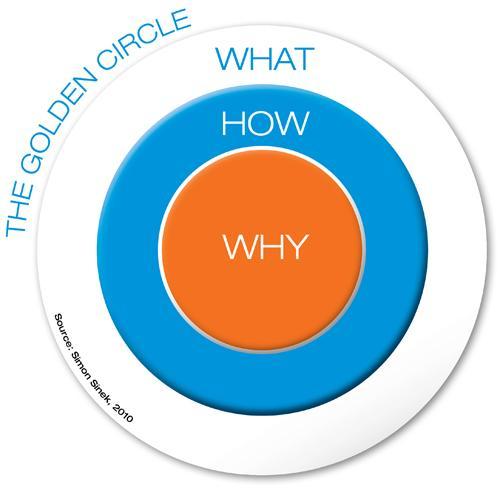
This Golden Circle Theory proposed by Simon Sinek has yielded excellent results. 
Hear it straight from the horse’s mouth in detail:
https://simonsinek.com/golden-circle/

Social media marketing is not to show your graphic,  editing, or photographic skills. The sole purpose is to address a customer’s pain point, respect their choices and adhere to their anticipation about what they may like about your business. Remember, it only takes a fraction of a second to unlike or unfollow the business page, but to make them hit that Like initially may have taken days, if not months. 

Also, different social media platforms have different needs- images, videos, text, or ideas. Once you plan your content, put relevant text, photos, and video content based on this principle that suits your business’s platform. Not to forget the #hashtags. The research that one puts in using the right hashtags gets more bang for your buck. Note that not all platforms are suitable for your business; don’t be eager to be on them all. Make sure you will have the content for regular postings.

 One needs to have analytical skills to design marketing strategies. Every social media platform provides marketers with analytics that help them better understand customer demographics and provides data with deeper insights into our business prospects. A seasoned strategist allows businesses to study emerging platforms’ demographics and suitability for their companies. 

Social media marketing is a good mixture of science, art, and psychology. It is the foundation for a successful business. But, it demands patience and vision. It’s more than being a photographer. 

Social Media Marketing is the heart of the modern business.

To me personally, deploying these techniques over time resulted in more page likes and follows consistently:

One example of steady, consistent Facebook marketing

An efficient social media marketer must have a calendar and a plan with updates that suit the business and customer needs. The effort should close the gap between a prospect and the company. 

Social media marketing offers marketers tools to analyse, evaluate and improve. Social media platforms are growing, providing businesses with various platforms and ever-changing algorithms by Google, etc. An efficient (digital) marketing specialist helps harness analytics and target the organically and paid market segment in the best way that suits your business. 

Happy Socia Media Marketing. 

Restaurant Landscape — Post-Pandemic

Employing digital marketing techniques is a step closer to ensuring a safe dining experience post-Covid

Driving on the deserted roads of once a busy Burnet Road in Austin has not been an easy picture to forget and move on. Covid-19 has turned 2020 into one of the worst years both in terms of economic and people loss. According to Reuters, workers in the leisure and hospitality industry have fared worse than most during the pandemic. With countries stopping travel (domestic and international) and issuing stay-home orders resulting in things as they are, the restaurant industry suffered the most. 

 It’s too late to revive some restaurants and food trucks forced to shut down as soon as the lockdowns were announced. Their inability to swiftly move online and reach out to customers in a contact-free world was the primary reason for this debacle. Survived are those that adapted the relevant technology and made their digital presence prominent. Some companies such as Dominos and Starbucks have posted a marginal profit even in this scenario. 

As can be seen from Figure 1, a survey showed that cooking at home was on a high during the initial days of Covid-19, with goods being delivered at the door or with curbside pickups made easier. After a couple of months, when the fun of trying new recipes and home cooking became tedious, restaurants started doing pick-up or take-out and delivery services. This tedious chore of cooking every single day made people realize what they have been missing. Slowly when restaurants started the dining-in facility with social distancing and extra sanitization in place, customers sighed a relief of normality. 

Figure 1: Eating habits that were observed pre and post-Covid 19 [1] 

With vaccinations in place, these numbers look optimistic. But, unequivocally, the two things that people missed this past year: travel and restaurants

So, are our restaurants better equipped to handle the demand while still following safety measures? CDC has issued guidelines on the no mask policy this week. Does that mean restaurants can go back to complete normality? Considering the phobias and uncertainty around, we can’t conclude the answer may be a complete yes.

 Online interactions have penetrated way deeper into our lives over the past year; consumers prefer virtual interactions, “touchless” contacts– paperless menus, QR codes, online order & payment options, and not to undermine people’s dependence on online reviews! On top of that, retaining customers has become possible only with sales promotion techniques such as coupons, discounts, join-our-app promotions, etc., alongside pampering on their special days and holidays in place. Finding online customers also means tracking and profiling them; personalize and customize their needs with a good user experience (UX) and customer experience (CX), which will embellish a restaurant’s online performance and its CX of the whole process. The bottom line is the businesses that survived the pandemic moved digitally or have been digital.

For a restaurateur, it’s not an easy task to be digital. To manage the digital traffic, feedback and reviews, and to oversee the heavily overcrowded competitive online presence on top of updating menus and maintaining hygiene standards is a tough grind. That’s where the marketing software companies come into the picture, which has been a blessing to the restaurant industry post the Covid-19 pandemic.

 With millennials and Gen Z’s preference to working remotely and dining out becoming prominent, restaurants have to move their menus online. Meal kits and dinner box deliveries have proven that people want daily, healthy meals to be delivered home. Online reviews by authentic users and social media influencers available at no cost are the critical decision-making parameters that sway a prospect to a customer. So, with all the backend engineering and the employment it generates, the restaurant industry can now be considered a primary sector. A successful online presence warrants the need for digital marketing: announcing your presence to the digital world.

Digital marketing is a complicated process of targeting and managing prospects, customers, & advocates. Software companies that manage these restaurant profiles ought to have dedicated professionals working 24×7. As customers’ every move and every silence is tracked by the search engines, more so with ever-evolving digital platforms and new algorithms. This tracking provides the data that feeds a restaurant’s digital process. Reaching customers is a good starting point and could be done via email marketing, content management, presence on relevant social media platforms, and website optimization. With consistency in these initial steps, to be on the top pages of search engines is an arduous ultimate step for the success of any online business. 

As shown in Table 1, customer adoption of digital technologies to order food is rising. Besides these, generating QR codes helps reach customers without being lost in transit.

I did not do this before the pandemic and have not done it since its onset (%)I do this somewhat or much less now than I did before the pandemic’s onset (%)I do this about the same as I did before the pandemic’s onset (%)I do this some or much more than I did before the pandemic’s onset. (%)
Using the phone to call in an order for pickup18.515.724.141.7
Buying food from a restaurant’s website27.814.319.338.6
Using mobile order-ahead to order food from restaurants to eat at home30.313.717.938.1
Ordering food delivery using aggregators such as Grubhub or UberEats49.211.413.126.2

  Table1: Altered activities related to eating food from restaurants [2] 

Digital marketing also incorporates AI (Artificial Intelligence) techniques to gauge customer preferences and trends. This automation helps businesses identify any short-comings in their services and address the pain points of their customers and the restaurants, too, improving the dining experience.  

Profiling and targeting prospects require great attention to detail. Is our customer a fitness freak or a vegan or seafood lover? What demographics do they fit? Social media platform statistics show the demographics of their audience: age, gender, location, ethnicity, etc. So, a restaurant’s existence on social media yields dividends in ways that never existed before. Its analytics give precise information about target customers. A digital marketing software company and restaurant business complement each other to be digitally successful and exist in the future. 

With software marketing tools in place, digital marketing bridges the gap between the customers and restaurants. 

Customer Segmentation involves:

  • Demographic Segmentation
  • Psychographic Segmentation
  • Geographic Segmentation
  • Behavioral Segmentation


Digital Marketing targets these customers by:

  • Email Marketing
  • PPC Marketing
  • Social Media Marketing
  • Content Marketing
  • QR Code Generation
  • Feedback Management
  • App Marketing
  • Personalized Marketing
  • SEO Marketing

With the changes in people’s lifestyles, the restaurant industry must embrace digital technologies more so post-pandemic. Consequently, accessibility to design and procure food by the touch of a finger should be ubiquitous. The recent AI trends enabling this digital marketing revolution should help pave the way for the future of any restaurant business, thus making it immune to any future pandemics.

References:

[1] QSR Magazine

https://www.qsrmagazine.com/consumer-trends/restaurants-greatest-competition-post-covid-19-home-cooked-meals 

[2] PYMNTS.com                                                                                                   https://www.pymnts.com/news/retail/2021/restaurant-habits-in-the-post-covid-future-by-the-numbers/

Traditional Marketing vs Digital Marketing: My Journey!

While traditional marketing runs on the four Ps – product, price, promotion, and place; modern marketing, also called digital marketing, runs primarily on place, place, and place. Place where you find the right audience, where prospects can find discounts, a place where people find answers to their questions.

Almost every platform gives marketers statistics of their target market, right from the number of people their posts have reached to the engagement to the best day and time to reach the prospects. E.g., Google Display Network comes with AdWords, Content Marketing, Email Marketing, SEO, to name a few.  Social media giants like YouTube, Facebook, Instagram, Twitter, and Pinterest have opened up their platforms for marketing and sales, all aiming at reaching prospects who could be turned into customers. This digital process fills our customer funnels or flywheels. Imagine the magic these analytics do when one pays for ads on these platforms!

Several parameters such as age, gender, interests, likes, searches, queries, etc., add to filling their customer funnels. While customers find something that interests them, marketers find ‘data’ that keeps their funnels filling. In most scenarios, customers are aware of this. However, they continue to be that ‘data’ as it’s a win-win situation for those who feel they are part of this inevitable digital society. Remember the famous adage “if a service is free, you are the product”? Well, in this case, every socially active account holder is the data!

It is estimated that there are about 3.8 billion social media users with an estimated market of about 48 billion U.S. dollars.

https://www.statista.com/topics/1538/social-media-marketing/

While studying ‘Advertising’ during my MBA times, we were made aware of the legalese that marketers are allowed to enlarge their product image by a certain percentage. That’s how we bought many products, for over a century, just being enticed by the colour and size of the images. In this digital marketing world, the phenomenon of using ‘testimonials’ and ‘endorsements’ is also an attribute of advertising by either the ordinary buyer or a celebrity to appeal to the potential buyers. As a digital marketer, I understand no ‘enlarging’ the actual features is acceptable in these testimonials. What customers express is what they feel. Of course,  businesses should take reviews with personal targets and biases with a pinch of salt. This feedback marketing gains prominence with the advent of paid reviews by some big giants in this field!

This is my first marketing blog. I wanted to introduce those who see all these platforms daily but didn’t know that they are actually the data that keeps this billion market marketing world on the move.

I was part of the traditional marketing world since 2002. I started as an assistant marketing manager in India, and moving to the UK began the marketing ladder right from being a salesperson. That’s where I practised the real-time interactions salespeople have with customers that form the basis for ‘relationship marketing’ and ‘customer experience management (CX)’ –precisely what marketers need to know in their careers! Of course, thus followed awards and accolades.

With a break of a few years in my career and moving to the US, I dived into digital marketing without knowing what it was about six years ago! And in these three years, I have worked on brand awareness, email marketing, content creation, and managing advertisement campaigns for different companies and events; I’ve raised their sales by over 40% at times!  

Marketing was a proven success by many stalwarts who did not have either a marketing or a management degree. With digital marketing taking over traditional marketing, we have professional degrees in place, and even coding is now a part of it. Who would have thought!

Now, the world belongs to those who are ‘masters of many trades’.