Nature and Nurture
“I would have loved to join you all over this weekend, but I teach English to immigrants” – One of our ‘white’ friends in the UK during my initial days there. Just getting into my sales sector and being a married, teetotaler, new to the country employee, I found my husband Bala’s university colleagues more open to getting into groups. They were diverse too. It included Brits, Jamaicans, an Arabic, an Indian, a German, and a Barbadian. Their discussions varied from accents to dialects to baking and cooking to cultures to racism. To me, who grew up with ‘Fair & Lovely,’ a face cream to enhance fair skin by the Hindustan Unilever company, racism is totally an ambiguous concept. Racism to Indians is a concept we compromise and get used to daily. It could happen within the families to inter-state. Many of us wake up to the word racism only when we step out of the country! To non-Indians, we are all brown-skinned, and this Indian concept of fairness doesn’t matter. So this Indian fairness, a myopic concept of what is fair on which the fairness and skin-bleaching industry is built, is a made-to-believe concept. This is both nature and a nurture problem. But why?
Every country has its own internal differences and issues that are unavoidable or inevitable. India, too has them. Wounded by innumerable invasions, cultural disparities, and religious persecutions, India has been evolving every day for 3700 years. Now, the fight is between the powerful vs. the normal citizens. With politicians giving every struggle a political touch, it has become the responsibility of India’s mature citizens to truly demonstrate ‘unity in diversity’ with all these ongoing issues. There are about 50+public holidays in India, and children have always been growing in a multi-cultural society for as long as anyone can remember- the amalgamation of nature and nurture. But we still believe that white is good, black is bad; with an instilled Indian belief that southerners are dark /black in complexion, this is also a North vs. South problem. Yet, applying those fairness creams, we join the BLM (Black lives matter) movements that happen abroad. Rather ironically, the same film stars who are brand ambassadors of these creams are the first to tweet support for BLM.
It has always been the case of the stronger oppress weaker, be it under the pretense of colonialism, nepotism, capitalism, or racism; across the countries, across the cultures! So, is this a nature vs. nurture problem or a question of mind over matter? Maybe both, or to put it in simpler words, it’s the mindset. But with societies evolving, can we generalise opinions and facts? The answer is “NO”!
Unquestionably black lives matter; human lives matter; women matter; lives matter. We are all one human race. Who are we to decide if one race is more equal or less? And why do we even have to fight for what is ours? Even after decades of abolishing slavery and untouchability, after the win in the women’s suffrage movements, why are we on the streets fighting for equality? What can we do to be the change? Definitely not by sharing what’s already been published in the newspapers, not by taking political sides to stay disguised and play the game of equality. As literate souls, we need to look inwards and educate ourselves and those dependent on us for their formation.
I have observed that not all families or parents discuss these issues with children. These future citizens are raised being totally blinded to the efforts put in by some reformists and achievements that happen slowly but steadily. Until children reach their individuation process, their thoughts and deeds are either taught and practised at home or hereditary.
“Can you decline a service offered by a doctor that doesn’t belong to your caste/religion/faith? If a certain head of a district/state/country who hails from another faith invites you to dinner, would you reject it? Some were treated inhumanly by others in the casteist society, and our forefathers might have done it too. Would you be okay if your own friend harbours such an opinion against you and humiliates you? It’s time we bear the brunt to bring in the desired change. One cannot be prejudiced, judged, discriminated or hated based on the physical appearances or the nature of the birth.” This was my dad’s response to my sister’s query about casteism in India.
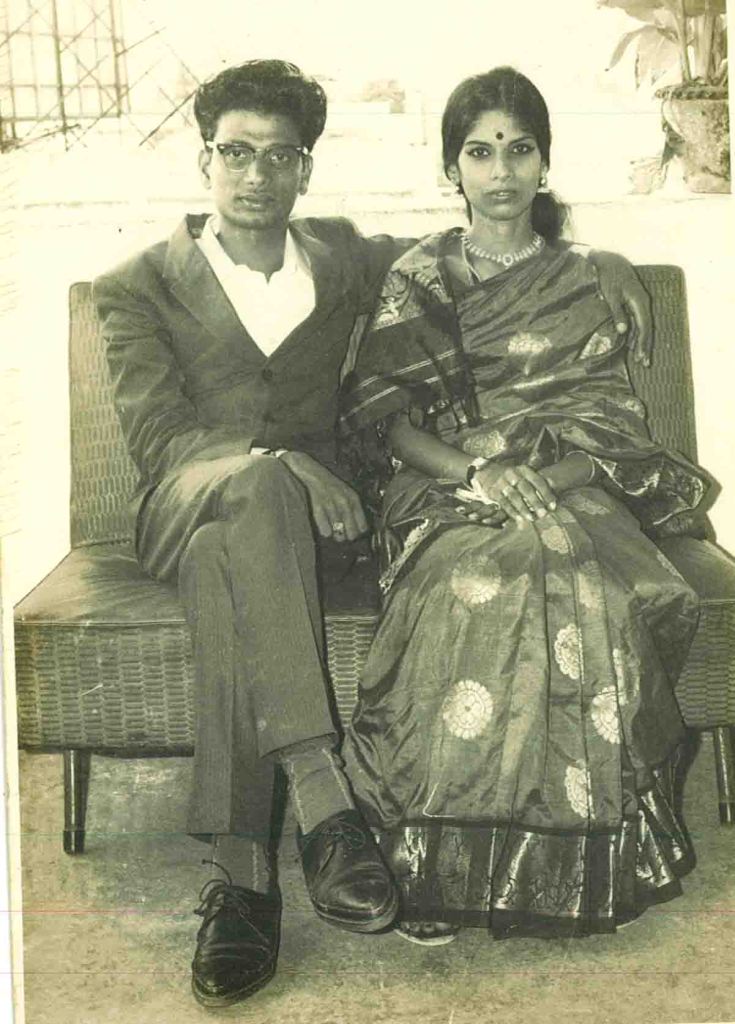
With head held high and hand on my heart, I can proudly say he showed us the path of humanity and led us the right way. In this whole process of uplifting the downtrodden masses, my dad was a victim too. He was denied prestigious professor posts in reputed universities twice -once by a powerful sect and another time because of a ‘generalised’ view by the decision-maker, whose forefathers might have been oppressed in the name of casteism. He never complained about those nor developed hatred against any one particular community. All he did and does is to encourage anyone interested in pursuing education and support them however he could, including feeding those aspirants at home- irrespective of what caste or religion they belong to. These life lessons have been helping me navigate professionally and personally and not be judgemental based on people’s appearances and origin. Be it my dad in his own country or my kids in a different country or me or you -every one of us is always generalised and judged. Yet, the beauty of this journey is meeting similar people with the same values; a majority of them don’t share my nationality, skin colour, or faith. People aren’t all good or bad based on their physical appearances.
Next time, before any of us try to generalise, remember, that’s not fair!
Yes, people are being oppressed, and movements must be justified. I exercised my first right to vote at the age of 18 with pride without totally appreciating the women’s suffrage movements that went behind. I also enjoyed living in the West without being humiliated every day because of my skin colour. There were lots of sacrifices made by our pioneer,, and the BLMs help us survive too. I would also appreciate white people who fought for our human rights then and participating now in the BLM movements like many social reformers from the Hindu upper castes who fought against untouchability and men who fought against Sati (cruel system to kill wives of those lost their husbands). I believe that to bring equality, we don’t have to pull others down. Equality cannot be a wheel in which someone has to be oppressed all the time. We need a change in the mindset. One cannot bring in their preexisting opinions while dealing with people of any colour or country. Yes, we do carry a herd mentality that represents us and separates one sect of people from the other. But, every interaction must be started afresh. It has to be beyond the method in madness. All we need is to remind ourselves that we are humans first.
On innumerable counts, I have seen people vehemently spreading hatred, and I wonder what they teach their children? The golden rule for parenting is to not say ‘don’t‘ to a child; instead, it’s advised we offer them a safer alternative and encourage them to try that. So, that principle doesn’t apply to these adults? Judging everyone based on their appearances, culture, and likes/dislikes is utter nonsense. Instead, to express what one prefers and why is much more a better approach than announcing what one hates! This latter approach doesn’t serve any purpose.
Be the change doesn’t mean preach hatred. Be the change is to do something valuable that really could help those who need it. Be the change includes educating our own children about how they deal with others, including being empathetic towards everyone’s needs, being socially responsible, being part of community events- not just our dedicated group that only caters to our individual needs; using our language/professional skills not to support our children get those ‘voluntary hours’ but truly dedicate time and efforts to those communities that are in desperate need for them just like our English friend I mentioned in the beginning.
Any movement aimed at bringing equality or treating everyone and thing with respect should be an ongoing process, not triggered by one event that creates the troughs and crests momentarily. “Go with an open mind when you meet anyone. Let not their colour, creed, and faith provoke you into assumptions. Have an open dialogue, offer a true hand of friendship. Not everyone can be friends, but that shouldn’t be b(i)ased on physical appearances. Everyone is equally equal”- is what I teach my kids. What do you teach them?
 Across three continents!!